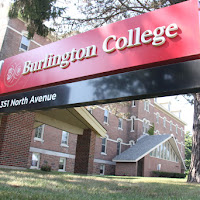
A Tale of Two Colleges
Posted on 11:33 PM
1 comment


Categories: Anxiety, Burlington College, Depression, Education, Fordham University, Mental Health, Personal
Earlier this evening, I finished reading Part II of Johann Hari's Lost Connections: Uncovering the Real Causes of Depression - and the Unexpected Solutions. In this part, Hari lays out what he describes as the nine real causes of depression and anxiety, each of which are tied to the concept of disconnection. As I read through these, I realized that what he was describing would serve as a remarkable lens through which to contrast my college experiences at Fordham University and Burlington College. In this post, I will do exactly that, by briefly examining whether or not the six environmental factors Hari has identified were present during my experience at each school. (I will not examine the three psychological/biological factors, as those are not directly applicable.)

Cause One: Disconnection from Meaningful Work
At Fordham University, I came to feel that the work that I was doing there had little meaning, that it lacked connection to the realities of the world beyond the campus. Additionally, I had almost no control over determining what the work was that I would be doing in the first place. My course schedule was almost completely prescribed for me, and would remain so for the foreseeable future. I had no input into the content of each course, and little leeway regarding the parameters of the individual assignments. This lack of control led me to feel disempowered and disillusioned regarding my own education.
At Burlington College, however, the situation was almost the exact opposite. Every single class that I took there had direct connections to the problems of modern society. I had much more flexibility in determining which courses I would be taking in route to my major. In some classes my fellow classmates and I had the ability to actually determine what we wanted to study and explore. Almost every professor gave me the opportunity to conduct open-ended research, and present the results to my peers. As a result, my education felt much more self-directed, and in turn more meaningful.
Cause Two: Disconnection from Other People
Despite attending a school with thousands of other students, in the largest city in the United States. I felt very lonely at Fordham University. I formed no meaningful friendships, either on- or off-campus. I spent most of my time alone outside of the classroom, even on the occasions when I decided to venture out into New York City. I felt no connection to my roommate, the other students in my residence hall, or my classmates. I had no real relationships with any professors or staff. In fact, it got to the point where I convinced myself that being a loner was my natural status in life. It is extraordinary to me to think that upon leaving Fordham, there was no one there that I felt the need to say goodbye to.
Burlington, of course, was a much smaller city, and Burlington College was one of the smallest schools in the country. Despite this - or perhaps because of it - I was able to develop a strong sense of community at multiple levels. I formed the closest friendships of my life while living at the Cottage, the on-campus residence hall. In general, I had solid relationships with my fellow housemates, classmates, and other students at the school. As my best friend told me during my second semester there, I had really "come out of my shell"; I could feel my social anxiety fading with each passing day. I was also able to form connections with my professors, the staff, and even to some extent the president of the school. I felt a genuine sense of pride in attending Burlington College, a sense that we were all "in this together". Unlike in New York City, I also was able to form some connections off campus. Overall, I felt a much strong sense of community while living in Burlington, compared to my time in the Bronx.
Cause Three: Disconnection from Meaningful Values
One of the initial factors in the process that led me away from Fordham was when I began to question why I was there in the first place. I came to realize that my motivation was almost exclusively extrinsic (a term I only discovered upon reading in Hari's book). In other words, I was attending classes and doing assignments not because I really wanted to, but because I felt I had to. I viewed it as me simply trying to get the grades, so I could get the credits, so I could get a degree in the end. It was nothing more than credentialization. Eventually, as my depression worsened this extrinsic motivation was no longer strong enough, and I stopped doing assignments for some classes altogether. This led me to fail a class entirely, for the first and only time in my life.
When I submitted my personal statement to Burlington College as part of my application, I stated that I sought knowledge for its own sake. For the most part, that was exactly what I was able to do there. I attended classes and completed assignments because I was genuinely interested in and engaged with the subject at hand. There were numerous instances where I would go beyond the requirements of an assignment simply because I wanted to. I felt real pride in my work, something that had been absent in my time at Fordham. In Burlington, the emphasis was far less on the outcome and more on the process of learning itself. As a result, I was able to return to a state of academic success and intellectual enrichment that was far more familiar to me.
Cause Five: Disconnection from Status and Respect
For me, my time in New York City was a classic example of "be careful what you wish for". One of the motivating factors that led me to Fordham in the first place was a desire for "anonymity", for the ability to "blend into the crowd". As I learned, however, that was not what I had hoped it would be. I felt a depleted sense of identity, as if I was a "nobody" compared to previous experiences. I felt that I lacked the respect of my peers - and to be honest, felt little respect for them as well. Perhaps most devastatingly, for the first time in my life, I felt as if I was not "smart", as if I had nothing meaningful to contribute to conversations either inside or outside the classroom.
At Burlington College, I experienced something dramatically different: popularity, or at least some version of it. My friends genuinely seemed to value the time they spent with me and the conversations we had together. At times it almost seemed as if they were competing for my attention! My housemates had so much respect for me that they effectively drafted me to run for president of student government - an office they then voted me into. While serving as student-body president, I felt a sense of responsibility and duty to my peers, unlike anything else I had ever experienced. The remarkable thing about all of this was that this popularity and respect was based not on my academic ability but rather on my actual personality - a truly heart-warming fact.
Cause Six: Disconnection from the Natural World
When I first applied to Fordham, I had the option to choose either Lincoln Center in Manhattan or Rose Hill in the Bronx for my campus. I chose Rose Hill, because I wanted a "real campus", one with green space and trees and things like that. I must admit that it was actually a beautiful campus, with a well-manicured landscape. However, with every day that I spent there my opinion began to shift, and I felt that this beauty was achieved simply through artificial means. I could hear the landscapers constantly outside my room with their lawnmowers and leaf blowers. There was very little "natural" about it, which became only more apparent the more I read Henry David Thoreau's Walden. The fact that the world beyond the campus gates was the concrete jungle of New York only increased my sense of isolation form the natural world.
Burlington College, on the other hand, could not have been placed in a much more beautiful setting if it tried. On one side there was a view of Lake Champlain and the Adirondack Mountains in the distance; on the other was the Green Mountains. At night when I left my windows open in my dorm room, all I would hear were the sounds of wind blowing through the trees, the waves of the lake lapping on the shore, and the insects chirping and buzzing in the late summer air. I took frequent walks - both alone and with friends - through the myriad parks and trails that surrounded the school. The campus itself featured a large, hilly field dotted with trees, which by springtime I found myself reading books under. It was in Vermont that I discovered just how beautiful - and dark - the night sky could be.
Cause Seven: Disconnection from a Hopeful and Secure Future
For the first month or so I spent at Fordham, I had a number of issues. I spent much of that time busy, sick, and broke. However, I felt that those would pass and that I would end up having a great experience. By October that illusion vanished. When I returned home for Columbus Day weekend it fully dawned on me just how much I disliked being there, and found that I had absolutely zero desire to return to campus. From that point on, I knew I had no future at Fordham. My desperation became so bad that I began to consider dropping out of school altogether. The only thing that kept me going through the end of the semester was the prospect of being able to transfer to Burlington College.
In Burlington, the one significant problem I did have was a near-constant state of anxiety that I experienced: the existential fear that my time at Burlington College would come to a premature end. This fear was driven by both my own personal financial problems as well as those of the school itself - and which unfortunately were proven justified when the school abruptly closed just one year into my attendance. The odd silver-lining was that this anxiety drove me to try to get the most out of my experience at Burlington College, as if any given day could be my last one there. And, for the most part, I was able to do exactly that.
Conclusion
I spent much of my time at Fordham - and the period immediately afterward - in a state of severe depression, one of the most severe episodes of my life. It is not hard to see why. I was doing meaningless work to which I assigned little value, surrounded by people I felt little connection to or respect for, while being almost completely isolated from the natural world. It was, simply put, the single worst experience of my life.
Burlington College, meanwhile, was the happiest period of my life. I built strong relationships with people built on shared experiences and mutual respect, did meaningful and relevant work that I valued for its own sake, and was in a community that recognized the importance of its relationship to the natural world. Unfortunately, that experience came to a premature end, and I have found it difficult to move on with my life in the aftermath of the school's closure. In many ways, that sudden severing of connections at so many different levels was a traumatic experience for me, one that I may never fully recover from. However, the lessons I learned there will stay with me forever, and will guide me as I continue the project of rebuilding my life.

Cause One: Disconnection from Meaningful Work
At Fordham University, I came to feel that the work that I was doing there had little meaning, that it lacked connection to the realities of the world beyond the campus. Additionally, I had almost no control over determining what the work was that I would be doing in the first place. My course schedule was almost completely prescribed for me, and would remain so for the foreseeable future. I had no input into the content of each course, and little leeway regarding the parameters of the individual assignments. This lack of control led me to feel disempowered and disillusioned regarding my own education.
At Burlington College, however, the situation was almost the exact opposite. Every single class that I took there had direct connections to the problems of modern society. I had much more flexibility in determining which courses I would be taking in route to my major. In some classes my fellow classmates and I had the ability to actually determine what we wanted to study and explore. Almost every professor gave me the opportunity to conduct open-ended research, and present the results to my peers. As a result, my education felt much more self-directed, and in turn more meaningful.
Cause Two: Disconnection from Other People
Despite attending a school with thousands of other students, in the largest city in the United States. I felt very lonely at Fordham University. I formed no meaningful friendships, either on- or off-campus. I spent most of my time alone outside of the classroom, even on the occasions when I decided to venture out into New York City. I felt no connection to my roommate, the other students in my residence hall, or my classmates. I had no real relationships with any professors or staff. In fact, it got to the point where I convinced myself that being a loner was my natural status in life. It is extraordinary to me to think that upon leaving Fordham, there was no one there that I felt the need to say goodbye to.
Burlington, of course, was a much smaller city, and Burlington College was one of the smallest schools in the country. Despite this - or perhaps because of it - I was able to develop a strong sense of community at multiple levels. I formed the closest friendships of my life while living at the Cottage, the on-campus residence hall. In general, I had solid relationships with my fellow housemates, classmates, and other students at the school. As my best friend told me during my second semester there, I had really "come out of my shell"; I could feel my social anxiety fading with each passing day. I was also able to form connections with my professors, the staff, and even to some extent the president of the school. I felt a genuine sense of pride in attending Burlington College, a sense that we were all "in this together". Unlike in New York City, I also was able to form some connections off campus. Overall, I felt a much strong sense of community while living in Burlington, compared to my time in the Bronx.
Cause Three: Disconnection from Meaningful Values
One of the initial factors in the process that led me away from Fordham was when I began to question why I was there in the first place. I came to realize that my motivation was almost exclusively extrinsic (a term I only discovered upon reading in Hari's book). In other words, I was attending classes and doing assignments not because I really wanted to, but because I felt I had to. I viewed it as me simply trying to get the grades, so I could get the credits, so I could get a degree in the end. It was nothing more than credentialization. Eventually, as my depression worsened this extrinsic motivation was no longer strong enough, and I stopped doing assignments for some classes altogether. This led me to fail a class entirely, for the first and only time in my life.
When I submitted my personal statement to Burlington College as part of my application, I stated that I sought knowledge for its own sake. For the most part, that was exactly what I was able to do there. I attended classes and completed assignments because I was genuinely interested in and engaged with the subject at hand. There were numerous instances where I would go beyond the requirements of an assignment simply because I wanted to. I felt real pride in my work, something that had been absent in my time at Fordham. In Burlington, the emphasis was far less on the outcome and more on the process of learning itself. As a result, I was able to return to a state of academic success and intellectual enrichment that was far more familiar to me.
Cause Five: Disconnection from Status and Respect
For me, my time in New York City was a classic example of "be careful what you wish for". One of the motivating factors that led me to Fordham in the first place was a desire for "anonymity", for the ability to "blend into the crowd". As I learned, however, that was not what I had hoped it would be. I felt a depleted sense of identity, as if I was a "nobody" compared to previous experiences. I felt that I lacked the respect of my peers - and to be honest, felt little respect for them as well. Perhaps most devastatingly, for the first time in my life, I felt as if I was not "smart", as if I had nothing meaningful to contribute to conversations either inside or outside the classroom.
At Burlington College, I experienced something dramatically different: popularity, or at least some version of it. My friends genuinely seemed to value the time they spent with me and the conversations we had together. At times it almost seemed as if they were competing for my attention! My housemates had so much respect for me that they effectively drafted me to run for president of student government - an office they then voted me into. While serving as student-body president, I felt a sense of responsibility and duty to my peers, unlike anything else I had ever experienced. The remarkable thing about all of this was that this popularity and respect was based not on my academic ability but rather on my actual personality - a truly heart-warming fact.
Cause Six: Disconnection from the Natural World
When I first applied to Fordham, I had the option to choose either Lincoln Center in Manhattan or Rose Hill in the Bronx for my campus. I chose Rose Hill, because I wanted a "real campus", one with green space and trees and things like that. I must admit that it was actually a beautiful campus, with a well-manicured landscape. However, with every day that I spent there my opinion began to shift, and I felt that this beauty was achieved simply through artificial means. I could hear the landscapers constantly outside my room with their lawnmowers and leaf blowers. There was very little "natural" about it, which became only more apparent the more I read Henry David Thoreau's Walden. The fact that the world beyond the campus gates was the concrete jungle of New York only increased my sense of isolation form the natural world.
Burlington College, on the other hand, could not have been placed in a much more beautiful setting if it tried. On one side there was a view of Lake Champlain and the Adirondack Mountains in the distance; on the other was the Green Mountains. At night when I left my windows open in my dorm room, all I would hear were the sounds of wind blowing through the trees, the waves of the lake lapping on the shore, and the insects chirping and buzzing in the late summer air. I took frequent walks - both alone and with friends - through the myriad parks and trails that surrounded the school. The campus itself featured a large, hilly field dotted with trees, which by springtime I found myself reading books under. It was in Vermont that I discovered just how beautiful - and dark - the night sky could be.
Cause Seven: Disconnection from a Hopeful and Secure Future
For the first month or so I spent at Fordham, I had a number of issues. I spent much of that time busy, sick, and broke. However, I felt that those would pass and that I would end up having a great experience. By October that illusion vanished. When I returned home for Columbus Day weekend it fully dawned on me just how much I disliked being there, and found that I had absolutely zero desire to return to campus. From that point on, I knew I had no future at Fordham. My desperation became so bad that I began to consider dropping out of school altogether. The only thing that kept me going through the end of the semester was the prospect of being able to transfer to Burlington College.
In Burlington, the one significant problem I did have was a near-constant state of anxiety that I experienced: the existential fear that my time at Burlington College would come to a premature end. This fear was driven by both my own personal financial problems as well as those of the school itself - and which unfortunately were proven justified when the school abruptly closed just one year into my attendance. The odd silver-lining was that this anxiety drove me to try to get the most out of my experience at Burlington College, as if any given day could be my last one there. And, for the most part, I was able to do exactly that.
Conclusion
I spent much of my time at Fordham - and the period immediately afterward - in a state of severe depression, one of the most severe episodes of my life. It is not hard to see why. I was doing meaningless work to which I assigned little value, surrounded by people I felt little connection to or respect for, while being almost completely isolated from the natural world. It was, simply put, the single worst experience of my life.
Burlington College, meanwhile, was the happiest period of my life. I built strong relationships with people built on shared experiences and mutual respect, did meaningful and relevant work that I valued for its own sake, and was in a community that recognized the importance of its relationship to the natural world. Unfortunately, that experience came to a premature end, and I have found it difficult to move on with my life in the aftermath of the school's closure. In many ways, that sudden severing of connections at so many different levels was a traumatic experience for me, one that I may never fully recover from. However, the lessons I learned there will stay with me forever, and will guide me as I continue the project of rebuilding my life.


